
Federal Hidalgo Release Paths
No BOP prison was identified within Hidalgo County in the official sources reviewed. That does not prevent a person arrested, charged, or sentenced from the area from entering federal custody elsewhere. A local-to-federal trail may begin with the Detention Center record, the official page for Sheriff William Chadborn, and a case found through New Mexico Case Lookup. BOP and USMS serve different stages. BOP generally holds sentenced federal prisoners. USMS manages many people before trial, during transport, and in contract facilities.
A BOP record with a past release date and a released or not-in-BOP-custody condition means the person departed BOP custody. It does not establish entry into the community. A state warrant, local hold, immigration detainer, or another transfer can change the destination. Federal supervised release can also continue after imprisonment. That is court-ordered oversight after the prison term, not continued BOP confinement.
| Federal path | Best first source | What it does not prove |
|---|---|---|
| Sentenced BOP custody | BOP Inmate Locator | Freedom from every other agency |
| Federal pretrial custody | Federal docket and holding facility | A BOP release status |
| USMS transport | Federal docket, facility, or USMS record | Community release |
| Post-prison supervision | Federal judgment and docket | Current prison custody |
Confirm BOP Hidalgo Release
The official BOP Inmate Locator supports two basic routes. A number search accepts a BOP Register Number, DCDC Number, FBI Number, or INS Number. A name search accepts the person’s name with demographic filters. Number matching is usually the clearer way to avoid confusing people with similar names.
- Select the number or name search suited to the identifiers available.
- Enter the complete identifier, or use the legal name and demographic details.
- Compare the result’s name, register number, age, race, and sex before accepting a match.
- Read the listed location and release date in context.
- Check the federal docket for the judgment, later orders, and supervised-release terms.
- Search another custodian when the record or case indicates a transfer, detainer, or pickup.
BOP public records generally cover federal inmates from 1982 forward and update daily. A same-day change may not be instant. Older records may require a federal records request or a National Archives search. The locator is a strong BOP custody source, but it is not a universal release registry.
When a future date appears, call it projected. Sentence computation, court action, earned sentence deductions, and other federal events can change it. When “Unknown” appears, report only that BOP cannot presently supply a determined date. Avoid estimating a date from the sentence on your own because the public locator does not expose every part of the calculation.
Federal Hidalgo Release Fields
BOP results can provide the person’s name, register number, age, race, sex, release date, and location. Each field answers a narrow question. The register number helps identify the correct record. The date and location describe BOP’s record, while the federal docket supplies the legal context that the locator does not show.
- Past release date
- A date BOP associates with departure from its custody.
- Future release date
- A projected date that can change before the event occurs.
- Unknown
- BOP cannot presently provide a determined release date.
- In Transit
- The person is moving within federal custody or transportation, not proven released.
- Supervised release
- Court-ordered oversight after imprisonment, explained in the judgment rather than by the locator alone.
The BOP locator interpretation page explains record coverage and status limitations. State the narrow result supported by the page. For example, “BOP shows departure from BOP custody on the displayed date” is sound. “The person is free from all custody” is not.
USMS Hidalgo Release Confirmation
USMS custody requires a different process. The agency manages federal pretrial prisoners, transport, and contract beds, but it does not offer a public released-person locator like BOP. A person may remain at a county or private holding facility under federal authority without appearing as a sentenced BOP prisoner. Ending USMS custody also does not prove entry into BOP or release to the community.
Start with the federal court docket. Identify detention, bond, remand, sentencing, transport, or dismissal orders. “Remand” means a court directs that the person remain or return to custody. Then identify the actual holding facility and ask about the custody event. If an existing historical record is needed, use the USMS Freedom of Information Act route.
| Question | USMS confirmation route |
|---|---|
| Was bond or release ordered? | Federal docket and order |
| When did the person leave the holding site? | Actual facility or movement record |
| Did another agency take custody? | Transfer record and receiving system |
| What does an older movement record show? | USMS FOIA request |
A court order and a facility event can have different times. Bond may be ordered while processing or another hold is still pending. A sentencing entry may precede transport. The sound record joins the docket’s authority to the holding facility’s movement event, then follows any receiving agency named in that record.
Note: BOP “In Transit” may include USMS transportation and must never be relabeled as release.
Federal Hidalgo Release Records
A BOP locator result may be enough to establish a narrow public fact, but a detailed record can answer why and where custody changed. Use BOP FOIA for existing agency records, especially when the public entry is incomplete or an older event needs support. Pre-1982 material may be held by the National Archives.
Federal Sentenced CustodyBureau of Prisons Inmate Locator
Public records generally from 1982 forward
Updated daily
Detailed records: BOP FOIA
The BOP FOIA page is the official request route. Identify the person by register number and describe the existing release, transfer, or custody record sought. A federal docket request goes through the court that owns the case rather than BOP.
Federal Pretrial and Transport CustodyU.S. Marshals Service detention network
Public historical locator: none
First checks: federal docket and actual holding facility
Existing agency records: USMS FOIA
A records request should ask for a known record, not demand a new release explanation. Include enough identifying detail to separate similar names, and follow any disclosed receiving authority.
For BOP, use the register number whenever possible and identify the type and approximate date of the record. For USMS, include the federal court and case number if known, the holding facility, and the relevant date range. Narrow requests are easier to match to an existing movement, detention, or release document. The federal docket remains the best source for the judgment and any supervised-release term.
Federal Hidalgo Release Limits
Federal custody can end at one agency and begin at another. An immigration detainer may route a person to ICE. A state or county hold may return the person to New Mexico custody. The federal judgment may impose supervised release after BOP incarceration. Each event needs its own source.
A detainer is a request or hold from another authority that can affect the destination at the end of one custody term. It is not the same as a criminal sentence, and it does not prove where a person went without a transfer record. When a detainer is possible, read the federal movement or release document and search the named successor system.
The custody sequence can be stated simply: Hidalgo arrest or case context → federal detention or transport → BOP prison when sentenced, if applicable → BOP release or transfer → federal supervision or another custodian. Not every case follows every step. Confirm only the stages shown by the docket and agency records.
For a county detention episode, use the Hidalgo County Detention Center release record. For a BOP sentence, stay with the federal locator and docket. The two systems do not replace each other.
View Federal Hidalgo Locator
The official BOP locator is the public starting point for a person who served a federal sentence.
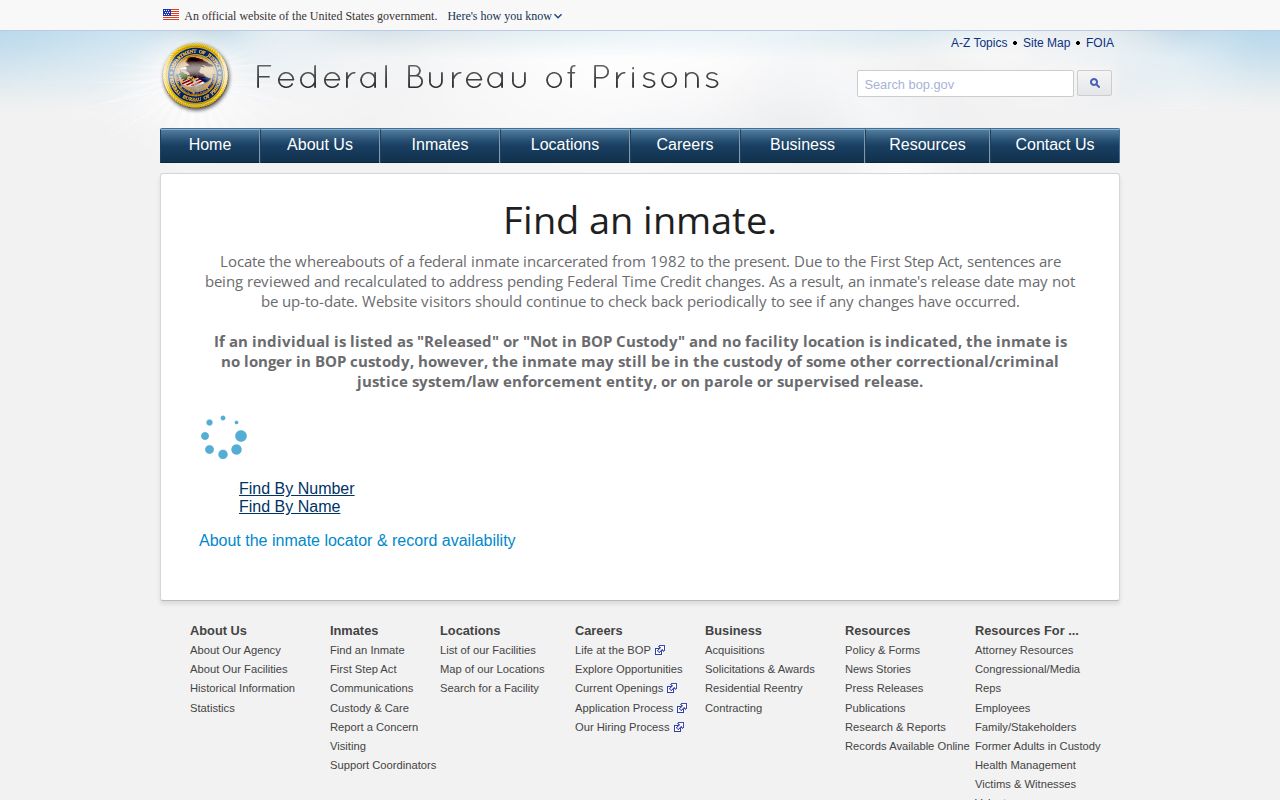
The search screen separates number and name searches. Use the result only for BOP custody, then read the docket and check any successor custodian.
The official BOP record explanation gives the context needed to interpret a release date or location.
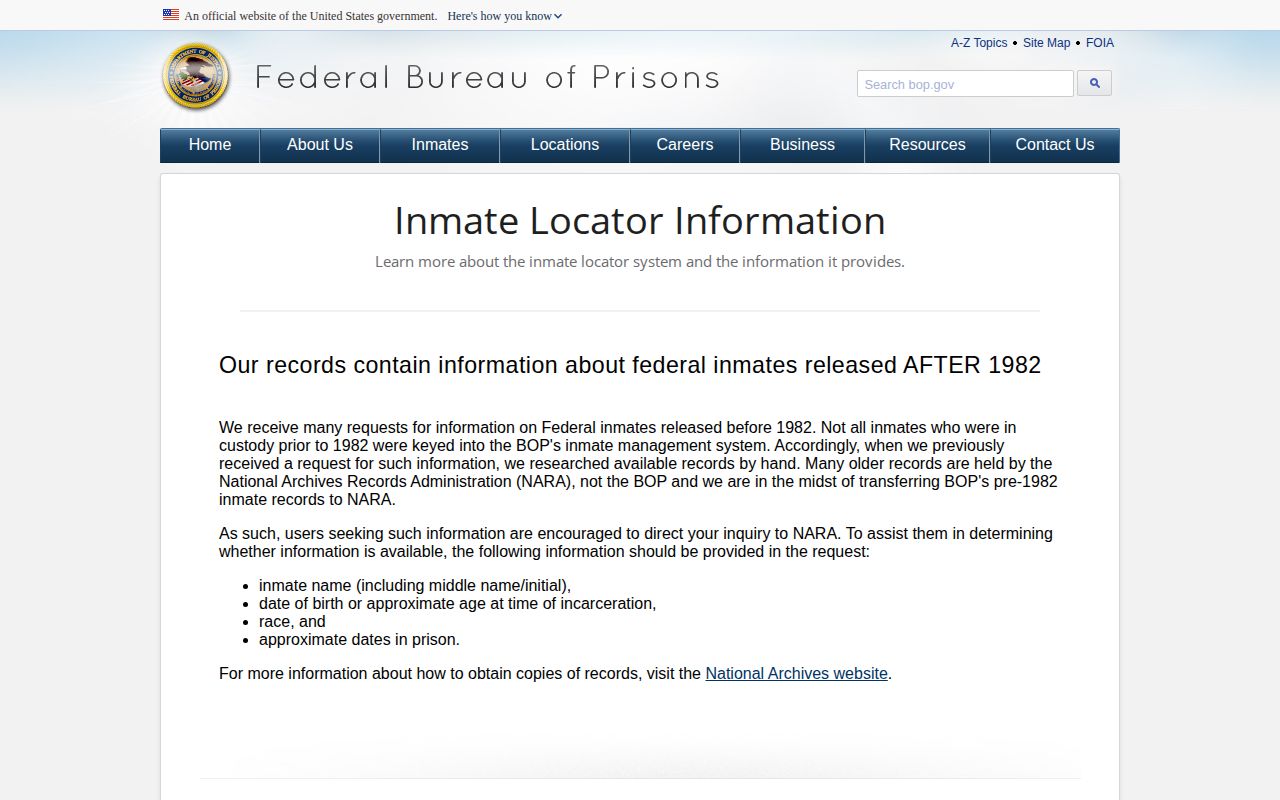
The interpretation source prevents “Unknown,” “In Transit,” and a BOP release date from being stretched beyond what the federal record proves.